We build surrogate models for engineering simulation.

Trained on your solver's results, a model predicts new designs in under a second, so you test far more options and run the full solver only on the best.

Every design change means another setup, solve and round of post-processing. That loop limits how many designs a team can try.

How it works

1

Automate the study

We script geometry, meshing, solving and post-processing for a study you run often, then run it across the design space.

2

Train a model on the results

A graph neural network learns on the simulation mesh and predicts the full field, such as the temperature in every cell.

3

Search, then verify

The model screens designs in under a second each. The best go back through the real solver, and we report the solver's numbers.

Case study: fin inserts for a gas-to-jet reactor

Fischer-Tropsch synthesis turns natural gas into liquid fuel inside catalyst-filled tubes. The reaction's heat output roughly doubles every 10 K, so a tube that can't shed heat runs away. The task: design aluminium fin inserts that keep the catalyst cool while leaving as much room for it as possible.

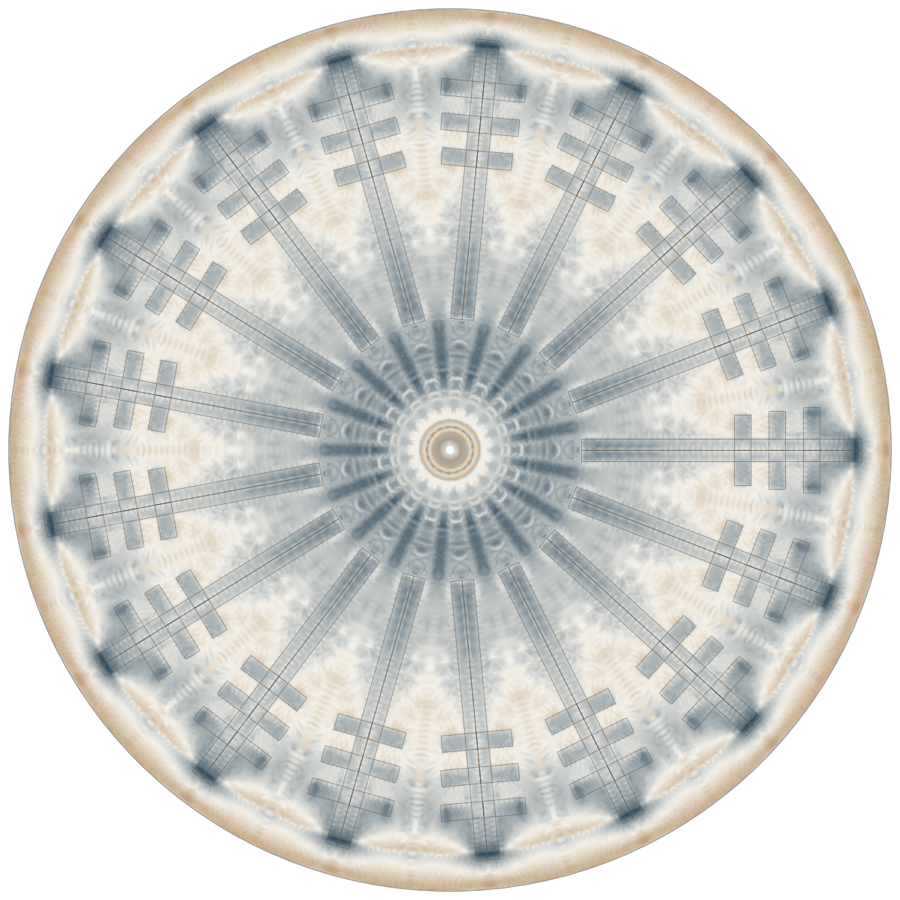
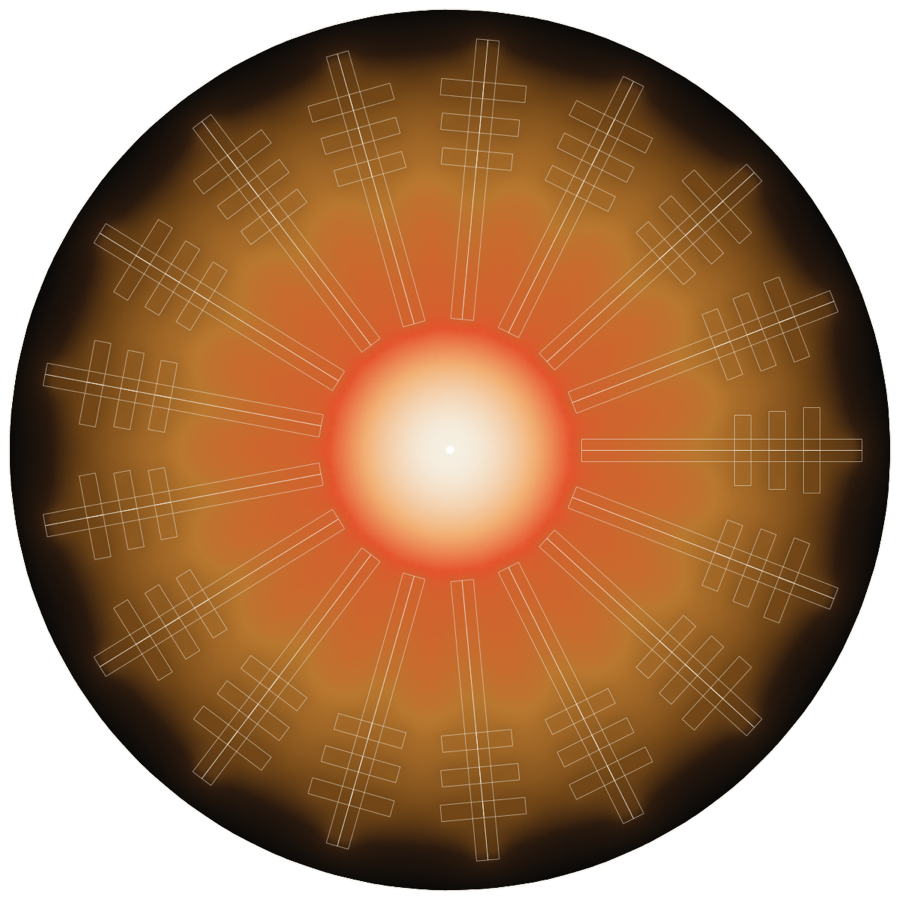
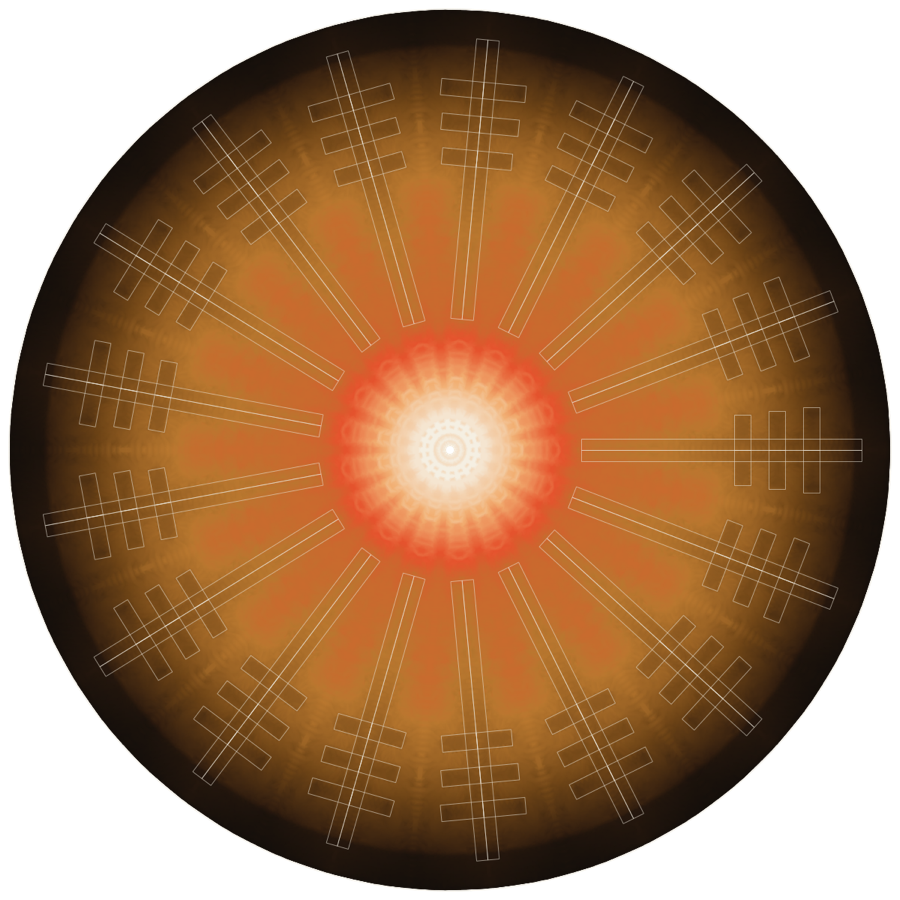
Surrogate prediction of the temperature field OpenFOAM solution for the same design
OpenFOAMSurrogate

A design the model never saw

A 4.3 inch tube with 17 branched fins, held out of training. Drag to compare. The prediction is within 0.23 K RMS and never more than 0.64 K off.

33×

Faster per design: 0.35 s against 11.7 s for OpenFOAM. Median of six designs on one Apple M1.

0.31 K

Median field error across 860 held-out simulations.

97.9%

Held-out simulations correctly classified as stable or runaway.

Searching the design space

A 2,200-design search with a finite-element solver found tapered, alternating fins with about 2% more room for catalyst than the best straight fins at the same stability margin. Screening that many designs takes:

Surrogate
about 13 minutes
OpenFOAM
about 7 hours

Projected from the measured per-design times, on one machine.
Working with us

Proof

We automate one study you trust and measure the time saved.

Pilot

More studies at a fixed price, with goals agreed up front.

Ongoing

We maintain the models as your designs change.

Founding team

Nate Roberts

Machine learning and MLOps

Builds the simulation pipelines and the models trained on them. Background in computer science and machine learning; helped structure BYU's MLOps course.

Peter Hartvigsen

Mechanical engineering and product management

Owns the physics: the reactor models and the finite-element solver. MS in mechanical engineering; has worked at several engineering companies.

Tell us about a study you run often.

Book a call